Some older houses are worth every dollar you put into them. Some are a shell you are paying to keep for no good reason. Telling the difference before you commit is one of the more valuable things a builder can do for you, and it is not a matter of taste — it comes down to a handful of testable conditions.
We look at a lot of older houses across Boise, Nampa, Caldwell, and Emmett. Here is the framework we actually use.
Start with the three things that are expensive to fix
Almost everything in a house is replaceable at predictable cost. Three things are not, and they should drive the decision.
1. The foundation
This is the first thing we look at and the most common reason a renovation stops making sense.
Look for: significant differential settlement, crumbling or spalling concrete, a post-and-pier system that has failed or was never adequate, walls out of plumb, doors and windows that have gone out of square across the whole house, and moisture or standing water in the crawlspace.
Minor settlement in a century-old house is normal and not alarming. A foundation that is actively moving, or one that cannot support the house you want without being substantially replaced, changes the arithmetic entirely — because replacing a foundation under a standing house is among the most expensive things you can do in residential construction.
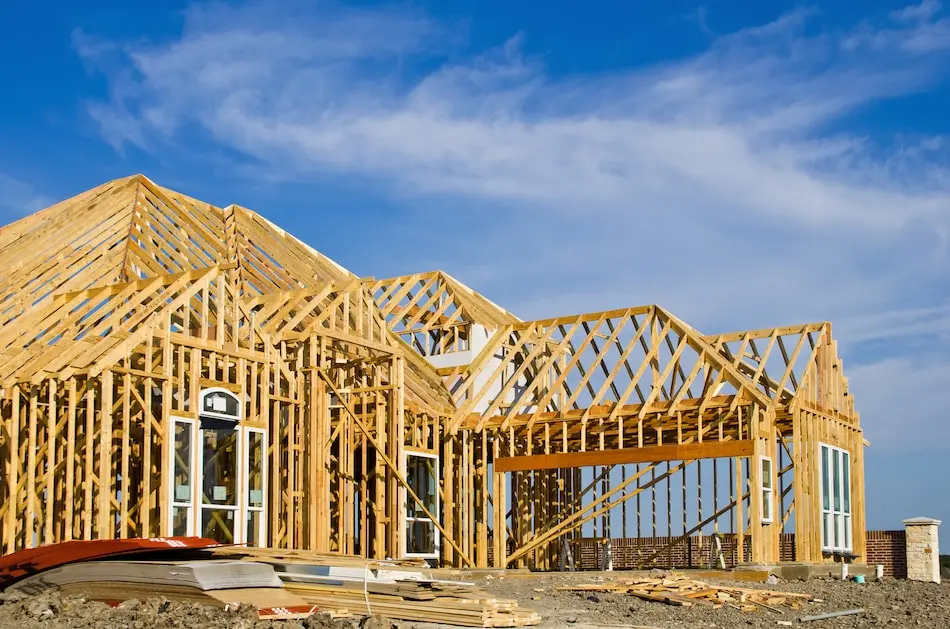
2. The framing and the load path
Look for: previous remodels that removed or notched structural members without replacing the capacity, additions framed without a proper load path down to footing, rot at sill plates and rim joists, insect damage, undersized floor framing that has visibly deflected, and roof framing that has spread or sagged.
One or two localised problems are repairs. A house where forty years of casual modifications have compromised the structure throughout is a different proposition.
3. Whether the plan can become what you want
Some houses simply cannot become the house you are describing without so much demolition that you are effectively building new anyway. Low ceilings, a chopped-up plan with bearing walls in all the wrong places, a footprint too small for the programme, or a second storey you cannot add to because the foundation and framing will not carry it.
Be honest here. The most expensive renovations we see are the ones where the client wanted an open, light, modern house and started with a compartmentalised one, and spent the entire budget fighting the original plan.
The things that are not reasons to tear down
People routinely over-weight these:
- Ugly. Finishes are the cheapest thing to change in a house.
- Old wiring or plumbing. Genuinely expensive, entirely predictable, and not a reason by themselves.
- No insulation. Fixable, and the fix is one of the best returns in the building.
- Bad layout in one part of the house. Often solvable by moving one or two walls.
- A previous bad remodel. Frustrating, usually reversible.
None of these are structural. All of them are line items.
The cost crossover
The rough rule we use: when a renovation approaches 65 to 75 per cent of what it would cost to replace the house, and there is no character or historic value worth preserving, rebuilding usually makes more sense.
The reason renovation loses at that point is that you are paying twice for the same space — once to remove and work around what is there, and again to build what you want. Demolition, disposal, shoring, protection of what stays, and the slower pace of working inside an existing structure are all real costs that new construction does not carry.
But the rule has three important exceptions.
The three exceptions that usually favour keeping the house
1. Historic and character value. A 1912 North End bungalow has materials, proportions, craftsmanship, and a street presence that cannot be reproduced at any price. Old-growth framing, real plaster, and original millwork are not available. Renovating that house is usually correct even when the spreadsheet is close — and in a designated historic district, demolition is reviewed and frequently not approved anyway.
2. Non-conforming setbacks or coverage. Many older houses sit closer to property lines, or cover more of the lot, than current zoning would allow for a new build. Those conditions are grandfathered as long as the structure remains. Tear the house down and you may only be able to rebuild something smaller or set further back. This is a genuinely significant factor on tight older lots in Boise and Garden City, and it is regularly overlooked.
3. Time and disruption. A renovation can often be phased and sometimes lived in. A teardown and rebuild means eighteen months and somewhere else to live. That has a real cost even where it does not appear in the estimate.
The lot question
Sometimes the honest answer is that the house is nearly irrelevant, because the lot is the asset.
In parts of Boise — the East End, the streets below Camel’s Back, Warm Springs, and some of the Bench with valley views — land value has risen enough that a small compromised house is essentially a site with a building on it. If the house is failing structurally, the case for replacement is easy.
Conversely, in much of Nampa, Caldwell, and Middleton, land is a much smaller share of total value, which shifts the arithmetic strongly toward renovating a sound structure.
How to decide in practice
- Get the structure assessed — foundation, framing, load path. Crawlspace and attic, not just a walk-through. This is the whole ballgame and it takes a couple of hours.
- Confirm the zoning position — what could be built new on the lot today, and whether the existing house is non-conforming in any way that benefits you.
- Check historic status before assuming demolition is available.
- Price both paths properly, with the renovation carrying an honest contingency for concealed conditions and the rebuild carrying demolition, disposal, and temporary housing.
- Compare against the finished value the completed house would carry in that specific neighbourhood. Boise, Meridian, and Nampa do not share a ceiling.
What we will actually tell you
We will walk the house and give you our honest read, including the version where we say the renovation you are describing does not make sense and you would be better off doing something else. We would rather have that conversation at the start than take on a project that disappoints everyone by the end.
Sometimes the answer is renovate. Sometimes it is rebuild. Fairly often it is a third thing — keep the sound original structure, remove the poorly built 1978 addition, and build a new addition properly. That path preserves the character, fixes the actual problem, and costs less than either extreme.
We do this assessment at no charge across Boise, Meridian, Nampa, Caldwell, Eagle, Star, Kuna, Garden City, Middleton, and Emmett.